The Best Kale Salad

Hey!

A neighbor of mine raved about this salad and although I haven’t tried it myself yet, I wanted to pass it along. She was quite adamant that it was THE best kale salad and I trust her judgment 🙂 It would be a great way to use items from the “Fall into Greens” CSA. Have you signed up yet? Stop by and talk to Mark and Gina about it tomorrow at market!

I wish I could give proper credit to whoever created this recipe but I am not sure where it originated!

The Best Kale Salad

Ingredients:

  • 1 bunch curly or Dino kale
  • 1/4 head purple cabbage
  • 1/2 red bell pepper, diced
  • 1 carrot, julienned
  • 1/2 cup golden raisins
  • 1/4 cup roasted unsalted peanuts
  • 3 tablespoons creamy peanut butter
  • 4 tablespoons warm water
  • 3 tablespoons rice vinegar
  • 1 tablespoon molasses
  • 1 tablespoon soy sauce
  • 1 clove garlic, minced
  • 2 teaspoons fresh ginger, minced
  • 1 teaspoon sesame oil
  • 1 teaspoon red pepper flakes

Directions:

  • De-stem and chop kale into small pieces. Shred cabbage on the large holes of a box grater. Mix together with red bell pepper, carrots, raisins and peanuts.
  • In a small food processor (or you can whisk by hand) combine remaining ingredients and process until fully blended.
  • Pour dressing over salad and massage for 1-2 minutes. Let the dressing soak in a bit before serving.

Weekly Farm Notes :: June 16th, 2015

Hello,

Just a quick note with items to expect at market tomorrow. Along with the produce listed below, we will also have cut flowers available – zinnia, coneflowers and gladiolus. We hope to see there!

~~~~~~~~~~~~~~~~~~~~~~~~~~~~~~~~~~~~~~~~~~~~~~~~~~~

June 17th Produce

Here are some of the items you can expect this week:

  • Tomatoes: You simply can’t go wrong with caprese – that delicious combination of tomatoes, basil and mozzarella. Check out the recent recipe posted by Main Street Farmers Market.
  • Blackberries: I found a really interesting recipe for Cold Brined Pickled Blackberries in Root to Leaf: A Southern Chef Cooks Through the Seasons. See below for the details. I love trying new techniques and look forward to trying this one soon.
  • Snap Green Beans: you gotta watch this video on how to quickly snap green beans. Good stuff!
  • Cabbage: we will have lots of cabbage options for you this week! Flathead, Cone, Savoy and Napa cabbage. Interested in fermenting some of that cabbage? Check out our recipe for Curtido, also know as Salvadorian Sauerkraut!
  • Red Russian, Toscano & Biera Kale: mix kale, delicious cheese from Sequatchie Cove and top it with an egg and you have dinner! Check out this recipe from our friends at Signal Mountain Farm.
  • Mint: looking for ways to use your mint? Check out this delicious recipe list from The Kitchn.
  • Papalo: I have never even heard of this herb! Can’t wait to experiment with it this week. Let us know how you use it!

~~~~~~~~~~~~~~~~~~~~~~~~~~~~~~~~~~~~~~~~~~~~~~~~~~~

Recipe :: Cold Brined Pickled Blackberries

As mentioned above, this is a recipe from Root to Leaf: A Southern Chef Cooks Through the Seasons. I really recommend you check it out!

Ingredients:

  • 4 cups blackberries
  • 6 juniper berries or a shot of London dry-style gin
  • 8 black peppercorns
  • 1 small bay leaf
  • 1/2 ” piece fresh ginger, sliced
  • 3 allspice berries
  • 2 cups red wine vinegar
  • 6 tablespoons sugar
  • 3 tablespoons kosher salt
  • 1 sprig fresh thyme
  • 1 shallot, quartered

Directions:

  • Fill a 1-quart jar with blackberries and place in the refrigerator. Lightly crush juniper, peppercorns, bay leaf, ginger and allspice. In a medium saucepan over high heat, combine vinegar, sugar, salt and 2 cups water and stir to dissolve sugar. Add crushed spices, thyme and shallot. When mixture comes to a boil, reduce heat and simmer for 10 minutes. Remove from heat and cool to room temp then chill for 1 hour. Pour brine over berries and refrigerate for up to 4 weeks.


Weekly Farm Notes :: June 2nd, 2015

Hello,

The Spring CSA ended last week but we will still have lots of goodies available tomorrow. See below for details on the produce you can expect. Also, I have included a recipe for Saffron Cauliflower and details on Yardlong Beans. Hope to see you at the market tomorrow!

~~~~~~~~~~~~~~~~~~~~~~~~~~~~~~~~~~~~~~~~~~~~~~~~~~~

June 3rd Produce

Here are some of the items you can expect this week:

  • Tomatoes!: since the tomato season is just kicking off, I am going to suggest simply slicing your tomatoes, dousing them in your favorite extra-virgin olive oil and sprinkling with balsamic vinegar, salt and pepper. There are many weeks ahead of tomato dishes, why not just enjoy them raw?
  • Kohlrabi: here is an easy, flavorful way to enjoy kohlrabi: mix together 3 tablespoons sesame oil, 4 teaspoons white vinegar, 4 teaspoons soy sauce, 2-3 tablespoons sugar, 4 teaspoons sesame seeds (I like the black seeds because they stand out more). Then peel and slice kohlrabi thinly and marinate in the mixture.
  • Flat Head Cabbage: I guess it’s about time for grilling recipes! Check out this recipe for grilled cabbage with yogurt and mint. It’s a great way to use mint from the market too!
  • Cheddar Cauliflower: this version of cauliflower was first discovered in Canada in 1970, although it took years of crossbreeding before it was widely available. The color comes from a genetic mutation that allows the plant to hold more beta carotene. It also contains about 25% more vitamin A than white cauliflower (information from The Kitchn). Check out the recipe below if you need some inspiration!
  • Rainbow Chard: summer weather calls for raw salads. This Creamy Maple Mustard Raw Chard Salad sounds great!
  • Tender Collards: don’t forget, you can dehydrate your greens! Check out more here.
  • Toscano & Red Russian Kale: kale is a great in these Greens & Cheese Frittata Muffins!
  • Lemon Balm: have you ever tried a shrub? It’s a sweetened vinegary drink and it tastes amazing steeped with lemon balm! Check out our recipe here.
  • Mint: use your mint in the grilled cabbage recipe above!

~~~~~~~~~~~~~~~~~~~~~~~~~~~~~~~~~~~~~~~~~~~~~~~~~~~

Recipe :: Saffron Cauliflower

This recipe comes from one of my favorite cookbooks, Plenty: Vibrant Vegetable Recipes from London’s Ottolenghi. It serves 4 as a side dish.

Ingredients:

  • 1-1/2 teaspoons saffron
  • 1/3 cup boiling water
  • 1 medium head of cauliflower, divided into medium florets
  • 1 large red onion, sliced
  • 2/3 cup golden raisins
  • 1/2 cup green olives, pitted and cut lengthwise in half
  • 4 tablespoons olive oil
  • 2 bay leaves
  • Salt and black pepper
  • 4 tablespoons roughly chopped parsley

Directions:

  • Preheat oven to 400 degrees F. Put the saffron strands in a small bowl and pour over the boiling water. Leave to infuse for a minute, then pour the saffron and water into a large mixing bowl. Add the remaining ingredients, except the parsley, and mix well.
  • Transfer mixture to a medium ovenproof dish, cover with foil and place in the oven. Cook for 40-45 minutes, or until the cauliflower is tender but still a bit firm, not soft. Halfway through the cooking time remove the dish from the oven and stir well, then cover again and return to bake.
  • Once the cauliflower is cooked, take it out of the oven, remove the foil and allow to cool down slightly before stirring in the parsley. Taste and adjust seasoning, then serve warm or at room temperature.

~~~~~~~~~~~~~~~~~~~~~~~~~~~~~~~~~~~~~~~~~~~~~~~~~~~

Summer Produce :: Yardlong Beans

Yardlong beans go by many names: bora, bodi, long-podded cowpea, asparagus bean, pea bean, snake bean, or Chinese long bean. Because it grows well is sub-tropical and tropical climates, it is typically found throughout Southeast Asian countries. Here are some interesting tidbits I discovered in my research:

  • Yardlong beans become waterlogged when cooked steamed or boiled so are best cooked with oil
  • Although the beans can grow to be 3 feet long, optimal picking is between 12-18″
  • They are a good source of protein, vitamin A, thiamin, riboflavin, iron, phosphorus, and potassium, and a very good source for vitamin C, folate, magnesium, and manganese
  • I have found references to canning and fermenting these beans so I plan on trying both this summer!

Weekly Farm Notes :: May 19th, 2015

Hello,

Now that we are close to the end of the Spring CSA, we wanted to give you a heads up on what to expect from us this summer. To start, we will have lots of beans! The list includes green beans, yard long beans, Crowder peas, Italian beans, October beans, and half white runners. To give you some insight into each variety, we will highlight a different bean each week. Up this week: Crowder peas! Check out the details below.

Hope to see you at the market tomorrow!

~~~~~~~~~~~~~~~~~~~~~~~~~~~~~~~~~~~~~~~~~~~~~~~~~~~

May 20th Produce

Here are some of the items you can expect this week:

  • Kohlrabi: I have been daydreaming of kohlrabi fritters lately. You too? This recipe looks like a great place to start.
  • Beets: you HAVE to try roasting beets and combining them with kalamata olives, orange and goat cheese. It is one of the best flavor combinations I have ever tried. It’s great on a sandwich or as a salad. I wrote about it here – give it a try and let us know what you think!
  • Green Leaf Lettuce: the lettuce this week has turned a little bitter so we wanted to provide a salad dressing recipe that would stand up to it. See below!
  • Salad Turnips: I have loved adding these raw to my sandwiches this week. Today I sliced these thinly and added them to a sandwich with hard boiled eggs, avocado and Sriracha. Talk about good food, fast!
  • Tender Collards: don’t forget, you can dehydrate your greens! Check out more here.
  • Toscano & Beira Kale: I really love these little baked quinoa and kale bites. I have a feeling you will too.
  • Napa Chinese Cabbage: I posted this recipe last week for spicy raw pak choi but I think it would be equally as good with this cabbage. I served it along side a ramen noodle soup and it was perfect.

~~~~~~~~~~~~~~~~~~~~~~~~~~~~~~~~~~~~~~~~~~~~~~~~~~~

Recipe :: Sesame-Miso Dressing

This recipe is from Cook’s Illustrated and will coat 10 cups of washed and dried salad greens.

Ingredients:

  • 2 tablespoons white miso
  • 1 tablespoon honey
  • 1 tablespoon soy sauce
  • 2 tablespoons water
  • 2 tablespoons peanut oil
  • 2 tablespoons sesame seeds, toasted and crushed
  • 1 scallion, sliced thin

Directions:

  • Whisk together miso, honey, soy sauce, and water in medium bowl; gradually whisk in peanut oil, then stir in sesame seeds and scallion.

~~~~~~~~~~~~~~~~~~~~~~~~~~~~~~~~~~~~~~~~~~~~~~~~~~~

Summer Produce :: Crowder Peas

I had never heard of crowder peas so thought we would start here. Below are a few interesting tidbits I found on this site. I am really looking forward to trying these this summer!

  • The crowder pea variety gets its name from the way its peas crowd themselves in the pod.
  • Blackeye peas, crowder peas, field peas, and Lady Cream peas are varieties of the same species commonly called “cowpeas” or “Southern peas”.
  • It has a rich, hearty flavor and creates a dark pot liquor when cooked.
  • 1 cup (172 grams) of cooked crowder peas has only 200 calories, very little fat and 45% RDA of fiber.

~~~~~~~~~~~~~~~~~~~~~~~~~~~~~~~~~~~~~~~~~~~~~~~~~~~

Other News

Have you read Alice O’Dea’s latest article? Check out her latest article on shrubs (which featured our recipe!).


Weekly Farm Notes :: May 13, 2015

Hello! I am late writing this and short on time but hope it helps. Hope to see you at the market tonight!

~~~~~~~~~~~~~~~~~~~~~~~~~~~~~~~~~~~~~~~~~~~~~~~~~~~

May 13th Produce

Here are some of the items you can expect this week:

  • Purple & White Kohlrabi: see below for a tasty way to prepare your kohlrabi!
  • Pak Choi: let us know how you use your pak choi! I need some inspiration 🙂
  • Romaine & Red Leaf Lettuce: if you need a go-to dressing for your salad greens, check out this Balsamic-Mustard Vinaigrette!
  • Salad Turnips: aren’t familiar with salad turnips? They are much sweeter than your average turnip and I love them raw. I love this idea of just slicing them thin and making a sandwich!
  • Red & Green Mustard: I love mustard greens in Indian inspired sauces. I made a more labor intensive version of this recipe last weekend and it was great tossed with veggies and served along side brown rice and naan.
  • Toscano Kale: thank you to Signal Mountain farm for this delicious recipe for Kale and Potato Fritters!

~~~~~~~~~~~~~~~~~~~~~~~~~~~~~~~~~~~~~~~~~~~~~~~~~~~

Recipe :: Kohlrabi Home Fries

This recipe is adapted from The New York Times and I love how simple and adaptable it is.

Ingredients:

  • 1-1/2  to 2 pounds kohlrabi
  • 2-3 tablespoons rice flour, chickpea flour, or semolina
  • Salt to taste
  • 2-4 tablespoons vegetable oil
  • Chili powder, ground cumin, curry powder or paprika to taste

Directions:

  1. Peel the kohlrabi and cut into thick sticks, about 1/3 to 1/2 inch wide and about 2 inches long.
  2. Heat the oil over medium-high heat in a heavy skillet (cast iron is good). Meanwhile, place the flour in a large bowl, season with salt if desired and quickly toss the kohlrabi sticks in the flour so that they are lightly coated.
  3. When the oil is rippling, carefully add the kohlrabi to the pan in batches so that the pan isn’t crowded. Cook on one side until browned, about 2 to 3 minutes. Then, using tongs, turn the pieces over to brown on the other side for another 2 to 3 minutes. The procedure should take only about 5 minutes if there is enough oil in the pan. Drain on paper towels, then sprinkle right away with the seasoning of your choice. Serve hot.

~~~~~~~~~~~~~~~~~~~~~~~~~~~~~~~~~~~~~~~~~~~~~~~~~~~

Events

May 16th: Wildwood Harvest is having an open house from 10am-2pm. I plan on bringing a picnic to enjoy on the farm – hope to see you there!

May 22nd: Crabtree Farms is hosting a “Buying Local on a Budget” class from 6-7:30pm.


Quinoa & Kale Bites

Hello!

This is just a quick post to share a recipe I made this week. It is inspired by this recipe from the 101 Cookbooks blog. I changed a few things but the base is the same – quinoa, kale and edamame baked in muffin tins. It is nutritious, fast to prepare and will provide a number of quick meals you can eat on the run. We hope you enjoy it!

Quinoa & Kale Bites
makes 12 muffin bites

Ingredients:

  • 3 cups cooked quinoa (from about 1 cup raw quinoa)
  • 1/2 packed cup of cooked finely chopped kale or other tender greens
  • 4 large eggs, lightly beaten
  • 1/2 cup shelled edamame, roughly chopped
  • 1/3 cup shredded Manchego or cheese of choice
  • 1 tablespoon minced cilantro
  • 1 teaspoon minced garlic (from about 3 medium cloves)
  • 1/4 teaspoon lemon zest (from about 1/4 of a large lemon)
  • Salt to taste (will depend on saltiness of cheese; I used 3/4 teaspoon table salt)

Directions:

  • Adjust oven rack to middle position and heat to 350 degrees.
  • Spray a standard 12 cup muffin tin with non-stick cooking spray and set aside.
  • Combine all ingredients in a large mixing bowl and mix until thoroughly combined. Fill each muffin tin almost to the top with the mixture and pat down lightly to even out the top. Bake for 25 minutes or until the muffins are set and they are golden brown around the sides. Remove from oven and allow to cool in the tin for 5-10 minutes. Transfer to a cooling rack and cool completely before storing in the refrigerator.

Recipes From Around the Web :: Greens Edition

Hi everyone!

We are knee deep in delicious greens so thought I would share some tasty recipes that are on my “must-try” list. The greens in most of these recipes are interchangeable with each other so feel free to experiment. We would love to hear how you use them!

Greens of All Kinds!

First up: you will come to realize that I rely on Cook’s Illustrated/America’s Test Kitchen for the basis of a ton of recipes (not to mention their equipment reviews and taste tests). It just so happens they are coming out with a cookbook titled The Complete Vegetarian Cookbook and have asked numerous food bloggers to test and post recipes from the book. Below are two that use greens and look amazing!

There are a lot of things I wish I thought of first – one of them being collard green wraps! Seriously, they don’t take much time and you can stuff them with just about anything. They are a great gluten-free option, too.

I think this next recipe would be great with the tender collards we are getting right now. Add in other colorful veggies from the market, plus this tahini based dressing, and you can’t go wrong!

Sometimes, you don’t need much to put together a healthful and satisfying meal. It’s just pasta, greens and cheese but it’s sure to satisfy.

Until next time, enjoy your greens!


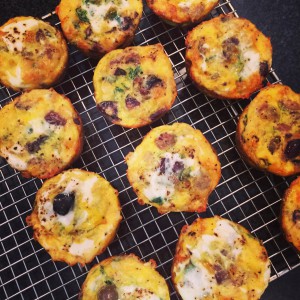
Greens & Cheese Frittata Muffins

This is an example of the type of recipe I love the most: simple, seasonal and with the option to vary ingredients based on what’s available. While I would call this recipe “simple”, I think it is important to understand a little science behind it. Specifically, the science behind how eggs cook and why it is beneficial to add a little (or a lot) of dairy.

First, let’s review how eggs cook. The next few paragraphs are from Cook’s Illustrated, who do a much better job explaining this than I can.

Eggs contain both egg whites and egg yolks. The white contains about 90 percent water and 10 percent protein. The yolk contains about 50 percent water, 20 percent protein, and 30 percent fat. The yolk also contains an emulsifier known as lecithin that keeps the fat suspended in the water. The protein strands in the egg white and yolk are all coiled up like a bowl of cooked spaghetti. For an egg to cook, the proteins need to uncoil. This process begins to happen when we mix the eggs in a bowl. The whipping action starts to uncoil the proteins. 

Once the eggs are heated and we start to cook the eggs, the now uncoiled proteins begin to chemically bond with each other. They form chemical cross-links—like strips of Velcro sticking to each other. This chemical bonding creates a network that traps water inside. This is observed as the coagulation temperature of eggs—the point when they begin to turn solid as they are cooked. As the eggs continue to cook, more bonds are formed until the network of proteins is strong enough to form the solid structure of a fully cooked egg with all the water trapped inside.

However, if you overbeat the eggs, the proteins will uncoil so much that they overreact and form a tough structure. In addition, too much cooking can lead to too much bonding between proteins, producing eggs that are also too tough.

So basically, we want the proteins to bond so the eggs will set up, but not bind so tightly that they become tough. Introducing dairy to the eggs will coat the protein molecules so that they can’t bind with one another as tightly. So it makes sense that so many egg recipes add some dairy to the recipe. The recipe below only adds 4 ounces of dairy to about 18 ounces of egg, whereas a quiche recipe is typically twice the amount of dairy to eggs by weight. So the texture you want in the end will determine how much dairy you will add.

Enough science talk – let’s get to the good stuff!

Greens & Cheese Frittata Muffins
makes 12 muffins

Recipe notes: 1) feel free to swap out the olives for just about anything else – a little bit of ground meat, chopped artichokes or sauteed mushrooms are just a few options; 2) you can use many different types of cheese here but I would avoid really dry, aged cheeses, such as Parmesan or an aged cheddar because they won’t melt very well. I have used both goat cheese and Cumberland from Sequatchie Cove but I think Monterey Jack, Fontina or even bleu cheese would be great.

Ingredients:

  • 1 tablespoon olive oil
  • 1/3 cup finely diced shallot (from 1 large shallot)
  • 8 ounces of tender greens (kale, tender collards, Swiss chard), stems removed, and finely chopped (about 3 cups)
  • 2/3 cup (3 ounces) pitted olives, roughly chopped (see recipe note)
  • 2 1/2 ounces cheese, shredded (see recipe note)
  • 9 large (18 ounces) eggs 
  • 1/2 cup (4 ounces) whole milk
  • Salt and pepper

Directions:

  • Adjust oven to middle rack and preheat to 350 degrees.
  • Spray a standard 12 muffin tin with non-stick cooking spray and set aside.
  • Heat oil in a large skillet over medium heat until shimmering. Add shallots and cook, stirring frequently, until softened and lightly browned, about 5 minutes. Add greens and cook, stirring frequently, until wilted, about 3-5 minutes longer. Remove from heat, taste, and season with salt and pepper. Equally divide the shallot/greens mixture between muffin tins (about 1 tablespoon per muffin cup). Equally divide the olives and cheese between each muffin tin.
  • In a medium mixing bowl, whisk eggs, milk, salt and pepper together until fully combined. I found it helpful at this point to transfer the egg mixture from a bowl to a 2 cup liquid measuring cup to make it easier to pour into the tins. Fill tins with the egg mixture, leaving at least a 1/4″ space from the top.
  • Transfer to the oven and cook for about 23-26 minutes, checking the tops to make sure they are just set. Remove from the oven and allow to cool for a few minutes. Transfer to a cooling rack and serve.