Weekly Farm Notes :: June 2nd, 2015

Hello,

The Spring CSA ended last week but we will still have lots of goodies available tomorrow. See below for details on the produce you can expect. Also, I have included a recipe for Saffron Cauliflower and details on Yardlong Beans. Hope to see you at the market tomorrow!

~~~~~~~~~~~~~~~~~~~~~~~~~~~~~~~~~~~~~~~~~~~~~~~~~~~

June 3rd Produce

Here are some of the items you can expect this week:

  • Tomatoes!: since the tomato season is just kicking off, I am going to suggest simply slicing your tomatoes, dousing them in your favorite extra-virgin olive oil and sprinkling with balsamic vinegar, salt and pepper. There are many weeks ahead of tomato dishes, why not just enjoy them raw?
  • Kohlrabi: here is an easy, flavorful way to enjoy kohlrabi: mix together 3 tablespoons sesame oil, 4 teaspoons white vinegar, 4 teaspoons soy sauce, 2-3 tablespoons sugar, 4 teaspoons sesame seeds (I like the black seeds because they stand out more). Then peel and slice kohlrabi thinly and marinate in the mixture.
  • Flat Head Cabbage: I guess it’s about time for grilling recipes! Check out this recipe for grilled cabbage with yogurt and mint. It’s a great way to use mint from the market too!
  • Cheddar Cauliflower: this version of cauliflower was first discovered in Canada in 1970, although it took years of crossbreeding before it was widely available. The color comes from a genetic mutation that allows the plant to hold more beta carotene. It also contains about 25% more vitamin A than white cauliflower (information from The Kitchn). Check out the recipe below if you need some inspiration!
  • Rainbow Chard: summer weather calls for raw salads. This Creamy Maple Mustard Raw Chard Salad sounds great!
  • Tender Collards: don’t forget, you can dehydrate your greens! Check out more here.
  • Toscano & Red Russian Kale: kale is a great in these Greens & Cheese Frittata Muffins!
  • Lemon Balm: have you ever tried a shrub? It’s a sweetened vinegary drink and it tastes amazing steeped with lemon balm! Check out our recipe here.
  • Mint: use your mint in the grilled cabbage recipe above!

~~~~~~~~~~~~~~~~~~~~~~~~~~~~~~~~~~~~~~~~~~~~~~~~~~~

Recipe :: Saffron Cauliflower

This recipe comes from one of my favorite cookbooks, Plenty: Vibrant Vegetable Recipes from London’s Ottolenghi. It serves 4 as a side dish.

Ingredients:

  • 1-1/2 teaspoons saffron
  • 1/3 cup boiling water
  • 1 medium head of cauliflower, divided into medium florets
  • 1 large red onion, sliced
  • 2/3 cup golden raisins
  • 1/2 cup green olives, pitted and cut lengthwise in half
  • 4 tablespoons olive oil
  • 2 bay leaves
  • Salt and black pepper
  • 4 tablespoons roughly chopped parsley

Directions:

  • Preheat oven to 400 degrees F. Put the saffron strands in a small bowl and pour over the boiling water. Leave to infuse for a minute, then pour the saffron and water into a large mixing bowl. Add the remaining ingredients, except the parsley, and mix well.
  • Transfer mixture to a medium ovenproof dish, cover with foil and place in the oven. Cook for 40-45 minutes, or until the cauliflower is tender but still a bit firm, not soft. Halfway through the cooking time remove the dish from the oven and stir well, then cover again and return to bake.
  • Once the cauliflower is cooked, take it out of the oven, remove the foil and allow to cool down slightly before stirring in the parsley. Taste and adjust seasoning, then serve warm or at room temperature.

~~~~~~~~~~~~~~~~~~~~~~~~~~~~~~~~~~~~~~~~~~~~~~~~~~~

Summer Produce :: Yardlong Beans

Yardlong beans go by many names: bora, bodi, long-podded cowpea, asparagus bean, pea bean, snake bean, or Chinese long bean. Because it grows well is sub-tropical and tropical climates, it is typically found throughout Southeast Asian countries. Here are some interesting tidbits I discovered in my research:

  • Yardlong beans become waterlogged when cooked steamed or boiled so are best cooked with oil
  • Although the beans can grow to be 3 feet long, optimal picking is between 12-18″
  • They are a good source of protein, vitamin A, thiamin, riboflavin, iron, phosphorus, and potassium, and a very good source for vitamin C, folate, magnesium, and manganese
  • I have found references to canning and fermenting these beans so I plan on trying both this summer!

Lemon Balm Shrub

Shrubs, which are acidic syrups typically flavored with fruit and/or herbs, date back to the 15th century. You can read all about the interesting history here but my main interest lies in the preservative nature of shrubs. These syrups were originally concocted in order to preserve delicate fruits and herbs before the time of refrigeration. Today, they offer the same qualities but are typically developed as a fun drink, both alcohol-free and as a cocktail mixture.

There are various ways to make a shrub at home. My recipe below is about as simple as it gets – dissolve sugar in vinegar and then steep herbs in the mixture. The process doesn’t get much harder, one just has to wait a bit longer for the final product. The Kitchn has a great run down here and Serious Eats adds another layer of complexity here by suggesting cold-processed shrubs are the way to go.

A simple online search will yield a shrub recipe for just about any ingredient. Don’t limit yourself to fruit and herbs – beets, fennel and spices all make for interesting recipes!

Lemon Balm Shrub
makes 3 drinks

Ingredients:

  • 3/4 cup granulated sugar
  • 3/4 cup apple cider vinegar
  • 1/4 cup lightly packed lemon balm leaves
  • Sparkling water, to serve

Directions:

  • Combine sugar and vinegar in a medium saucepan and stir to combine. Heat mixture over medium-high heat until it reaches a simmer, or until the sugar is fully dissolved. Remove from heat, add the lemon balm, cover and allow to steep for 10 minutes. Strain to remove the lemon balm and cool to room temperature. Transfer to an air tight container and refrigerate until ready to use.
  • To make a drink: combine 1/4 cup shrub and 1 cup sparkling water in a tall glass. Stir to combine and enjoy.

Quinoa & Kale Bites

Hello!

This is just a quick post to share a recipe I made this week. It is inspired by this recipe from the 101 Cookbooks blog. I changed a few things but the base is the same – quinoa, kale and edamame baked in muffin tins. It is nutritious, fast to prepare and will provide a number of quick meals you can eat on the run. We hope you enjoy it!

Quinoa & Kale Bites
makes 12 muffin bites

Ingredients:

  • 3 cups cooked quinoa (from about 1 cup raw quinoa)
  • 1/2 packed cup of cooked finely chopped kale or other tender greens
  • 4 large eggs, lightly beaten
  • 1/2 cup shelled edamame, roughly chopped
  • 1/3 cup shredded Manchego or cheese of choice
  • 1 tablespoon minced cilantro
  • 1 teaspoon minced garlic (from about 3 medium cloves)
  • 1/4 teaspoon lemon zest (from about 1/4 of a large lemon)
  • Salt to taste (will depend on saltiness of cheese; I used 3/4 teaspoon table salt)

Directions:

  • Adjust oven rack to middle position and heat to 350 degrees.
  • Spray a standard 12 cup muffin tin with non-stick cooking spray and set aside.
  • Combine all ingredients in a large mixing bowl and mix until thoroughly combined. Fill each muffin tin almost to the top with the mixture and pat down lightly to even out the top. Bake for 25 minutes or until the muffins are set and they are golden brown around the sides. Remove from oven and allow to cool in the tin for 5-10 minutes. Transfer to a cooling rack and cool completely before storing in the refrigerator.

Leaf Celery Gremolata

Gremolata is an herb based condiment typically made with parsley, lemon zest and garlic. Its beauty lies in its simplicity – just three ingredients, chopped, minced and grated and tossed together. Each ingredient is bold so just a sprinkling really heightens the flavor of whatever you use it with.

I swapped out the parsley in favor of leaf celery (CSA’ers – this is in next weeks share!). If you aren’t familiar with leaf celery, it looks a lot like parsley but the celery taste is unmistakable. There are actually 3 different celery plants grown for different culinary uses – stalk celery, celery root and leaf celery. This website provides a lot of additional background and growing information.

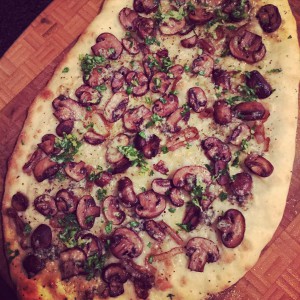
You can use this with many different types of dishes. The original version was made to accompany osso buco, a braised veal shank, so I imagine this would pair well with many types of roasted meat dishes. For cheese lovers, I love the flavor of celery with blue cheese. You could pick up some Sequatchie Cove Creamery’s Bellamy Blue at the Main Street Farmers Market and serve it on crackers with a little of the gremolata sprinkled on top. This also goes well with starchy dishes as well, such as risotto or pizza. I originally made this as a garnish for a mushroom pizza and it was fantastic (pizza can be a fairly quick meal when you purchase prepared pizza dough from your local grocer or Niedlov’s Breadworks). Please experiment and let us know how you use it! Enjoy!

Leaf Celery Gremolata
makes about 2 tablespoons

Ingredients:

  • 2 tablespoons freshly chopped leaf celery
  • 1 teaspoon lemon zest
  • 1 large garlic clove, minced

Directions:

  • Mix all ingredients together until fully incorporated. Best used when freshly prepared.