Quinoa & Chickpea Lettuce Cups

Hi!

Romaine lettuce is often associated with Caesar salad but we think it makes a great lettuce cup too. Unlike butter lettuce, which is very tender, it holds its shape well and you don’t have to worry about it crumbling underneath your filling. Also, our romaine is harvested when the outer leaves are only about 6 inches long, which makes it the perfect size for this application.

The filling variations are endless. Quinoa cooked in the way described below provides a good, sticky base for the other items but you can use millet, rice or any other grain you have on hand. Switch out the beans and use black, kidney, cannellini or even French lentils (or choose another protein source all together). You don’t have to use the olives or capers but I would include something with a bit of punch – chopped pickles, sun-dried tomatoes or some kind of chopped fermented vegetable. I like a little extra crunch from the celery but you can leave it out if desired. Choose whichever spices you like best and make it your own!

Quinoa & Chickpea Lettuce Cups
serves 4-6 as a main meal

Recipe note: below I suggest topping the lettuce cups with crumbled feta for ease but I think a feta or yogurt based sauce with fresh herbs would take this over the top. I am thinking of something like this recipe.

Ingredients:

  • 1 tablespoon olive oil
  • 1/2 medium yellow onion, finely diced
  • 2 large garlic cloves, minced
  • 1 cup washed quinoa
  • 2 cups water
  • 1 (15 ounce) can chickpeas, rinsed
  • 1/4 cup sliced olives
  • 1 tablespoon drained and rinsed capers
  • 3 tablespoons thinly sliced celery (from about 3 small stalks)
  • 1/2 teaspoon dried oregano
  • 2 tablespoons extra-virgin olive oil
  • 2 teaspoons red wine vinegar
  • Salt and freshly ground pepper to taste
  • Romaine lettuce and feta to serve

Directions:

  •  Heat oil in a medium saucepan until shimmering. Add the onion and cook, stirring often, until softened and just starting to brown, about 5 minutes. Add the garlic and cook, stirring frequently, until fragrant, about 30 seconds. Add the quinoa and water and bring to a boil. Reduce heat to medium-low, cover and cook until all the water is absorbed, about 16 minutes. Remove from heat and allow to sit for 10 minutes. Transfer to a medium mixing bowl.
  • Add the chickpeas, olives, capers, celery, oregano, oil, vinegar and salt and pepper and stir well to combine. Taste and adjust seasoning as needed. Serve on romaine lettuce leaves topped with crumbled feta if desired.

Weekly Farm Notes :: May 4th, 2016

Hello,

Mother’s Day is this Sunday! If you are celebrating your own mother or any other mother in your life, be sure to pick up some of our beautiful cut flowers. They’ll be a hit!

I am featuring Alice O’Dea’s weekly article up top this week: check out her 2-ingredient cookie recipe. I am sure my 2-year-old will love them (and who am I kidding…so will I)!

We will have lemon balm and mint infused water available in the booth for your enjoyment. See you tomorrow at market!

~~~~~~~~~~~~~~~~~~~~~~~~~~~~~~~~~~~~~~~~~~~~~~~~~~~

May 4th Produce

Here are the items you can expect at Market {M} and in the CSA {CSA}:

  • Red Kale Mix {CSA}: I have read that the longer you cook red kale, the sweeter it gets. Saute it in some olive oil over low heat for 30 minutes or so and add anything you like – olives, tomatoes, garlic, cheese or all of the above!
  • Ford Hook & Rainbow Swiss Chard {M/CSA}: our Swiss Chard and Orange Oat Muffins are an elegant way to feature Swiss chard at your weekend brunch.
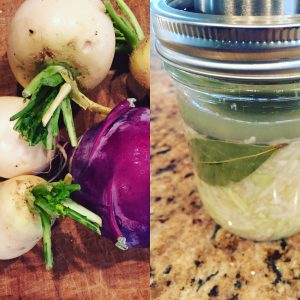
  • Purple Kohlrabi {M/CSA}: if fermenting foods seems a bit scary to you, read through the tips in our latest post on lacto-fermentation. We include a recipe for salad turnip and kohlrabi sauerruben, in which you grate the vegetables and toss them with salt and add a bay leaf. It’s an easy and delicious way to get started!
  • Tender Collards {M/CSA}: have you guys jumped on the “savory oatmeal” bandwagon? I haven’t yet myself but I am tempted. Recipes like this Savory Steel Cut Oatmeal would be a great addition to a Sunday brunch. Sauteed collards would be a great substitute for the arugula!
  • Lettuce Mix with Red Kitten Spinach & Edible Flowers {M/CSA}: the weather is warming up and that means I want to spend less time making anything that involves the stove or oven. Spring rolls are a go-to in my house when it’s too hot to cook. I love this Thai Spring Rolls with Cashew Sauce recipe but I add lots of fresh lettuce!
  • Edible Asian & Arugula Flowers {M/CSA}: these will make a great addition to the spring rolls above!
  • Baby Red Romaine Lettuce {M/CSA}: did you know romaine lettuce is good source of Vitamin A, Vitamin K and folate? Start your meal with a simply dressed salad for a nutritional boost to your meal!
  • Red Leaf Lettuce {M}: these greens have a strong flavor this week due to the heat so be sure to toss with a dressing that can balance it. I love anything with miso (Miso-Ginger Dressing) or avocado (Avocado Lemon Dressing).
  • Green Butter Lettuce {M}: these leaves are perfect for lettuce wraps. Here is a non-recipe recipe for lettuce wraps – saute a mix of vegetables and mushrooms until softened and toss with an Italian style vinaigrette. Add to lettuce wraps and top with buffalo mozzarella and a drizzle of balsamic vinegar. You won’t be sorry.
  • White Japanese Salad Turnips {M}: miso makes everything better. Try these easy Miso Glazed Turnips if you agree. PS – as an added bonus, you can use the greens in this recipe too!
  • Parsley {M}: here is a recipe you can use to incorporate all sorts of market goodies – Spring Tabbouleh. You can use our parsley, peppermint, salad turnips in place of radishes and kale or red leaf lettuce in place of arugula.
  • Peppermint {M}: this Roasted Lemon Chutney sounds like such a refreshing spread!
  • Lemon Balm {M}: here is a great roundup of fun things to do with this delicious herb – 12 Things to Do with Lemon Balm.


Preserving the Harvest :: Lacto-Fermention + A Sauerruben Recipe!

Hello!

We love fermenting here at Tant Hill Farm so figured it was time to share our tips and tricks to help you lacto-ferment at home. Lacto-fermentation happens when food is submerged in a salty brine and left to sit at room temperature for days, weeks or even months. A specific species of bacteria, Lactobacillus, converts sugars to lactic acid. This process not only preserves food but it also makes it more nutritious and digestible.

There is a lot to learn and we know it can seem overwhelming but it really boils down to the crucial steps listed below. Of course there is more to this – which type of container to use, how to flavor it, etc, but you need to understand these steps first. After reviewing the crucial steps, you will have a greater understanding of the sauerruben recipe below. We hope you enjoy it!

Crucial Steps for Successful Lacto-Fermenting at Home

  • Salt: 
    • Salt is crucial because it both draws liquid from the vegetable, creating its own brine, and also creates an atmosphere where only healthy bacteria can thrive.
      • Amount: most resources recommend using 2% – 5% salt of the fermented vegetables weight. That means trim, peel and cut your vegetables before weighing them and THEN calculate the amount of salt you need. I typically use about 3.5% salt and have had great results (I use sea salt). I would highly suggest investing in a digital scale to make this step easy.
      • Type: do a quick online search and you will find different opinions on whether the type of salt you use makes a difference of not. It comes down to the amount of sodium in your salt, and luckily, it is printed in the nutrition section on the box. Table salt typically has 580mg in 1/4 teaspoon and sea salt has 440mg in 1/4 teaspoon. So, given that I typically measure my salt using a teaspoon or tablespoon, if you use table salt, it will result in a saltier (and sometimes too salty) end product. In the end, I recommend looking at the sodium content on your salt box and if you have a choice, use the salt with the lower amount.
  • Submerge:
    • Lacto-fermentation is an anaerobic process, meaning it happens in the absence of air. That is why it is so important to have all vegetables submerged under the brine and all air-pockets removed. You will often see recipes that state you should add the vegetables a little at a time, pounding them down between each addition. This helps to ensure there are no air pockets remaining. You can also tap the finished ferment on the counter lightly or use a long skewer to remove any trapped air bubbles. There are all sorts of gadgets on the market to help – we love using the Kraut Source but you can use just about anything. It can be as simple as filling a plastic bag with brine and setting it on top to keep the vegetables submerged.
  • Time & Temperature:
    • Time and temperature work hand in hand. You can ferment anywhere between 55°F and 80°F. The lower the temperature, the slower the fermentation and conversely, the higher the temperature, the faster the fermentation. This also affects the flavor – slow fermentations typically have more complex, nuanced flavor whereas fast fermentations can have more intense flavors with a higher chance for off-flavors. There is a useful rule of thumb that states for every 10°C rise in temperature, the rate of reaction doubles. As an example, if it is 10°C (or about 18°F) hotter in your kitchen, expect your fermentation to finish in half the time. In the end, tasting your fermentation every day is the only way to know how it is progressing.

Kohlrabi Sauerruben
makes about 1 cup

Recipe note: traditional sauerruben is made with turnips but I added kohlrabi for an interesting twist.

Ingredients:

  • 15 ounces combined salad turnips and kohlrabi
  • 1-1/2 teaspoons fine sea salt
  • 1 bay leaf

Directions:

  • Trim the salad turnips and peel the kohlrabi. Grate on the large holes of a box grater. I had 8 ounces of grated salad turnips and 4 ounces of grated kohlrabi. The breakdown isn’t as important as the total amount as this determines the amount of salt.
  • Add the grated vegetables and salt to a medium mixing bowl and mix well to combine. Allow to sit for 10 minutes or so to extract the water from the vegetables. You can use any type of fermenting vessel but a pint sized glass canning jar works great here. Add the vegetables a little at a time, pounding them down with the back of a spoon between each addition. There should be enough liquid to cover the vegetables. Add the bay leaf and submerge the vegetables below the brine. If you aren’t using a device that covers the top, cover with cheesecloth and secure with a rubber band. Allow to ferment as desired. I find that I like my ferments after a week or so. Once it is to your liking, cover with a lid and transfer to the refrigerator. I have kept ferments for months and months in the refrigerator but this probably won’t last that long.

Weekly Farm Notes :: April 27th, 2016

Hello,

This is the 5th week of the Spring CSA session and we hope you are enjoying the bounty of the season. We are always open to your questions, comments and feedback regarding each CSA session so don’t hesitate to contact us.

See you tomorrow at market!

~~~~~~~~~~~~~~~~~~~~~~~~~~~~~~~~~~~~~~~~~~~~~~~~~~~

April 27th Produce

Here are the items you can expect at Market {M} and in the CSA {CSA}:

  • White Japanese Salad Turnips {M/CSA}: Sauerruben is a German fermented turnip recipe – think of sauerkraut but with turnips instead of cabbage. I made a version with traditional turnips but salad turnips would be just as good (add a bay leaf for a little extra flavor!).
  • Ford Hook & Rainbow Swiss Chard {M/CSA}: it’s easy to use your greens when they are pre-cooked and ready to go in the refrigerator. I will saute some greens at the beginning of the week and then toss them into various dishes. You can easily add these to a stir-fry at the end and top it with My New Favorite Stir-fry Sauce.
  • Toscano Kale {M/CSA}: I love coconut rice but I haven’t tried a quinoa version before. This Coconut Quinoa and Kale with Tropical Pesto recipe sounds like a great one to try.
  • Purple Kohlrabi {M/CSA}: if you aren’t sure how to use your kohlrabi greens, try dehydrating them for our Kohlrabi Greens Furikake recipe. It is super simple and the seasoning can be used any number of ways. I enjoyed it simply tossed with rice when I was short on fresh vegetables.
  • Tender Collards {M/CSA}: check out our Collard Greens Relish if you are looking for ways to preserve your greens!
  • Lettuce Mix with Red Kitten Spinach {M/CSA}: I usually think of kale when making a smoothie but lettuce can be a great addition too! Here is a Berry Lettuce Smoothie recipe is get you started.
  • Edible Asian Flowers {M/CSA}: use these beauties in dishes where they will be noticed – in a green or grain salad, as a garnish for smoothies or mixed into a compound butter.
  • Baby Red Romaine Lettuce {M/CSA}: romaine lettuce is classic in a Caesar salad as it doesn’t get soggy when tossed with the rich dressing. If you are looking for ways to enjoy this delicious salad without the guilt, try this 5-Minute Vegan Caesar Dressing.
  • Pak Choi {M}: oranges have been touted as the only way to get Vitamin C, however plenty of leafy greens contain close to or more than oranges. Pak Choi is high on that list – just another reason to love this ingredient!
  • Bold & Peppery Arugula {M}: tacos are a theme this week and this recipe serves double duty because it features radishes, too. Give these Vegetarian Arugula & Black Bean with Pickled Radish Tacos a try.
  • Beautiful Red Radish {M}: I always plan to ferment my radishes but end up using them in other ways. This week I am going to try this recipe.
  • Mint {M}: I love steeping mint in hot water, along with grated ginger and turmeric, for a wonderful tea. Add a little honey and lemon juice at the end to take it up a notch.
  • Garlic Chives {M}: Alice’s latest article on Breakfast Tacos is timely as I have corn tortillas in my freezer waiting to be used. I am not sure what the filling will be yet, but mixing minced garlic chives into an egg before cooking it sounds like a good start.
  • Lemon Balm {M}: I love mixing this herb with strawberries. You can make a simple syrup – 1 part water to 1 part sugar – and let the lemon balm steep in the syrup for about 10 minutes. Then pour a little syrup over fresh strawberries for a quick dessert.


My New Favorite Stir-Fry Sauce

Hi!

Stir-fries are perfect for weeknight cooking. During the time it takes to cook rice, you can chop and quickly saute your vegetables and protein and make a sauce. In the past, I have fallen into the trap of thinking I can just mix together soy sauce with a few other ingredients and it will turn out well. It usually doesn’t. I end up with a thin and overly salty sauce. So I set out to create a go-to sauce that can work with anything.

I wanted to use store-bought hoisin sauce as a base as it thick and flavorful but then I looked at the ingredient list on the back of the bottle. Most contain artificial colors and flavors. Instead, I decided to use some of the ingredients and flavors of hoisin but make it completely from scratch.

You can use just about anything in a stir-fry but here is my general guidance: choose one protein – meat, shrimp, tofu, tempeh, mushrooms; choose one hardy vegetable that will retain some crunch – carrot, radish, broccoli, cauliflower, kohlrabi, asparagus; choose one or more tender vegetables – greens, pak choi, scallions, peas, summer squash, eggplant, bell peppers, onions.

I hope you enjoy it as much as I do!

Stir-Fry Sauce
makes about 1 cup / enough for roughly 4 servings

Recipe note: this sauce freezes well so make a double batch!

Ingredients:

  • 1/4 cup white miso
  • 1/4 cup maple syrup
  • 1/4 cup chicken / vegetable broth or water
  • 2 tablespoons soy sauce
  • 1 tablespoon toasted sesame oil
  • 1 tablespoon rice vinegar
  • 2 teaspoons finely grated ginger
  • 2 teaspoons minced garlic
  • 1 teaspoon cornstarch
  • 1/4 teaspoon Chinese 5-spice powder

Directions:

  • Add all ingredients to a bowl and whisk until thoroughly combined.
  • Add the sauce to the remaining 1 minute of cooking the final batch of your stir-fry. This will allow the cornstarch to thicken the mixture slightly. You can keep any cooked but unused sauce in the refrigerator for 5-7 days.

Weekly Farm Notes :: April 20th, 2016

Hello,

If you haven’t already, connect with us on Facebook and Instagram. We would love to see how you use your vegetables and herbs each week! Tag your photos with #tanthillfarm to share with others in our community!

See you tomorrow at market!

~~~~~~~~~~~~~~~~~~~~~~~~~~~~~~~~~~~~~~~~~~~~~~~~~~~

April 20th Produce

Here are the items you can expect at Market {M} and in the CSA {CSA}:

  • Tender Collards {M/CSA}: do you ever eat collards raw? I haven’t tried it myself but if massaging kale can lead to a great salad, why not collards too? Here is a raw salad idea with apple cider vinegar and sun-dried tomatoes.
  • Rainbow Swiss Chard {M/CSA}: if you are looking for a healthy breakfast alternative you can eat on the go, try our Swiss Chard & Orange Oat Muffins!
  • Toscano & Siberian Kale {M/CSA}: unless it’s in a smoothie, I typically don’t think of kale for breakfast. However, combining it with eggs (and basically anything else you want) in a breakfast wrap sounds like a great way to start the morning.
  • Awesome Asian & Lettuce Salad Mix {M/CSA}: if you are looking for salad dressing inspiration, here is a collection of 52 Healthy and Homemade Dressings.
  • Pak Choi {M/CSA}: cabbage isn’t the only thing that can be turned into kimchi – pak choi is also great! And if you don’t have the time or energy for a lacto-fermentation, my Quick Kimchi recipe gives you lots of flavor without the wait.
  • Spring Radishes {M/CSA}: these Taco Pickles make use of cilantro too so be sure to pick some up and make a batch!
  • Wild & Spicy Asian Mustard {M/CSA}: if you are interested in learning more about wild mustard, check out this video. They grow just about anywhere so maybe you can find some around your home!
  • Spinach {M}: Mujaddara with Spiced Yogurt is nothing more than lentils, rice and onions, and is great with spinach or any other green you have on hand.
  • Bold & Peppery Arugula {M}: I love mixing spicy greens with starchy grains and a bold dressing. Our Arugula Rice Salad with Miso-Ginger Dressing is a fresh way use arugula but you could also add cooked greens as well.
  • Delicious Collard Raab {M}: this can be cooked just like broccoli raab. I loved it simply chopped and sauted over medium until the stalks were crisp tender and the leaves were crispy. You could toss this with rice and a fried egg for a quick and delicious meal!
  • Mint & Peppermint {M}: I love anything in fritter form. They are easy and great for kids and adults alike. Check out these Pea-Millet-Mint Fritters for a spring-like version!
  • Cilantro {M}: since I have cojita, the cheese called for in this pesto, this Cilantro Pesto is on my list for this week!
  • Lemon Balm {M}: considered a calming herb, lemon balm has been shown to reduce anxiety and promote sleep when combined with other calming herbs. Add some to your chamomile tea tonight!

~~~~~~~~~~~~~~~~~~~~~~~~~~~~~~~~~~~~~~~~~~~~~~~~~~~

Alice O’Dea Article

Have you read Alice O’Dea’s recent article? She reminds us 1) to be conscience of those with food limitations when cooking for a large group and 2) to help those in need during an upcoming food drive.


Weekly Farm Notes :: April 13th, 2016

Hello,

If you haven’t already, connect with us on Facebook and Instagram. We would love to see how you use your vegetables and herbs each week! Tag your photos with #tanthillfarm to share with others in our community!

See you tomorrow at market!

~~~~~~~~~~~~~~~~~~~~~~~~~~~~~~~~~~~~~~~~~~~~~~~~~~~

April 13th Produce

Here are the items you can expect at Market {M} and in the CSA {CSA}:

  • Red Russian & Siberian Kale {M/CSA}: Pasta is a staple in my household but I get tired of the same old pasta sauce. Our Weeknight Pasta with Walnut Sauce and Kale will make you excited for pasta again.
  • Ford Hook Swiss Chard {M/CSA}: “Perhaps one of the most important benefits of Swiss chard is its ability to regulate the blood sugar levels in our body. Syringic acid is one of the unique flavonoids found in Swiss chard, and it has a very unusual ability. It inhibits the activity of a specific enzyme named alpha-glucosidase. This means that less carbs are broken down to simple sugars, which allows the blood sugar levels in the body to remain stable, and prevent the plunges and peaks that are so dangerous for diabetic patients, or for those people who are at a high risk of developing diabetes.” Source found here.
  • Beautiful Spring Radishes {M/CSA}: if you are looking for a way to preserve your radishes, it couldn’t be easier (or tastier) than Spicy Quick Pickled Radishes. If you are feeling a bit more adventurous, try our Miso Cured Radishes!
  • Red Butter Lettuce {M/CSA}: these tender greens don’t need much in the way of dressing. In fact, a pungent dressing will mask its delicate flavor. I would recommend just a little oil, lemon juice, salt / pepper and fresh herbs.
  • Shiro Pak Choi {M/CSA}: Make this easy Raw Spicy Pak Choi Salad and serve it with rice and a fried egg for a quick, weeknight meal.
  • White Japanese Salad Turnips {CSA}: I love eating salad turnips raw or adding them to salads. You can also roast them, however, and use them in this lovely Roasted Radish and Salad Turnips with Barley Salad!
  • Garlic Chives {CSA}: these are similar to regular chives but with a few notable differences: 1) they have flat leaves compared to the round tubes of regular chives; 2) the flavor is more garlicky and less oniony; 3) they have white, star-shaped florets compared with the purple globe-like flowers of regular chives.
  • Mint & Peppermint {M}: I am trying to find healthy dessert alternatives and think this Thin Mint Smoothie sounds wonderful 🙂
  • Cilantro {M}: cilantro is typically a garnish but have you ever considered basing a salad on it? I hadn’t until I saw this recipe for Cilantro Salad. It is the perfect time of year to make this as it calls for asparagus too. Throw in some thinly sliced radishes or salad turnips along with garlic chives!

~~~~~~~~~~~~~~~~~~~~~~~~~~~~~~~~~~~~~~~~~~~~~~~~~~~

Alice O’Dea Article

Have you read Alice O’Dea’s recent article? A bean, a green and a grain – does dinner get any easier or delicious!?


Weeknight Pasta with Walnut Sauce and Kale

Hello!

In a past life as a personal chef, I would make this recipe for a client almost every week. He couldn’t consume anything acidic (onions, garlic, vinegar, etc) so I was always searching for ways to get a lot of flavor into a dish without falling back on those ingredients. You can add onions, garlic and/or vinegar but I think this dish is good without them too. And it’s one of those recipes that you can vary in SO many ways:

  • Pasta: I used fusilli but but you can use just about anything (if you make the sauce chunky, I think a short pasta would work best; if you puree the sauce, long, thin pasta would also work).
  • Nuts: I like the combination of walnuts and pine nuts but you can use just walnuts or try a different combination of your choice.
  • Herbs: I always used parsley in the past but I think basil or chives would be great too
  • Cheese: I like the way Pecorino stands up to the flavor of the walnuts but I think Parmesan or even goat cheese would be great.
  • Greens: don’t limit yourself to just kale – arugula, collards or chard would also be great. For tender greens, you can fold them right into the hot pasta without cooking them first.
  • Optional items: saute a little garlic with the kale and then deglaze the pan with a little white wine; finish with a little lemon juice or white wine vinegar; add caramelized onions.

Pasta with Walnut Sauce and Kale
makes 4-6 servings

Ingredients:

  • 1 pound pasta of choice (I used fusilli)
  • 1 tablespoon olive oil
  • 8 ounces kale, destemmed and finely chopped
  • 1 cup walnuts
  • 1/4 cup pine nuts
  • 1/4 cup chopped parsley
  • 3 tablespoons melted butter
  • 4 tablespoons extra-virgin olive oil
  • 1/2 cup shredded Pecorino
  • Salt and freshly ground pepper

Directions:

  • Cook pasta according to packing instructions and drain. Set aside.
  • While the pasta is cooking, heat 1 tablespoon olive oil in a 12″ traditional skillet over medium heat until shimmering. Add the kale and saute, stirring frequently, until tender, about 4-5 minutes. Remove from heat and add to a large mixing bowl.
  • Clean out the skillet used for the kale and dry. Return to the stovetop and toast walnuts over medium-low heat, stirring frequently, until fragrant and lightly browned, about 3-5 minutes. Transfer to a large cutting board. Toast the pine nuts, stirring frequently, until fragrant and lightly browned, about 2-3 minutes. Transfer to the cutting board. At this point, you can either chop the nuts finely by hand or transfer 3/4 to a food processor and process until finely ground; roughly chop the remaining nuts for added texture. Transfer nuts to the bowl with the kale.
  • Add the parsley, butter, olive oil and cheese to the bowl with the kale and nuts and stir to combine. Taste and adjust seasoning as needed. Mix with pasta and serve.


Weekly Farm Notes :: April 6th, 2016

Hello,

This is the third week of the “Walking to Spring” CSA session and we hope you are enjoying it!

We will have a variety of potted tomatoes and herbs available for sale. Please let us know if you would like to reserve any of the items below!

  • Tomatoes: Cherokee Purple, German Johnson, Brandywine, Sun-gold, Valencia, Matts Wild Cherry and Roma Paste
  • Herbs: English Thyme, Dill, Garlic Chives and Basil

See you tomorrow at market!

~~~~~~~~~~~~~~~~~~~~~~~~~~~~~~~~~~~~~~~~~~~~~~~~~~~

April 6th Produce

Here are the items you can expect at Market {M} and in the CSA {CSA}:

  • Toscano, Red Russian & Siberian Kale {M/CSA}: have you purchased any fresh turmeric at market lately? It is a nutrition powerhouse and has been used medicinally for ages. If you pick some up, try pairing it with our super healthy kale in this Tropical Turmeric Cleanser Green Smoothie!
  • Tender Collards {M/CSA}: I eat plenty of collards but I usually fall back on the same old recipe (pressure cooked with some onion and a little sugar). I have been craving a new way to enjoy these greens and think this Ethiopian Spiced Collards sounds like just what I need!
  • Rainbow Swiss Chard {M/CSA}: even if you don’t have broccoli stems, I think the combination of chards, apples and ginger in this Broccoli & Chard Stem Ferment sounds wonderful!
  • Spring Radishes {M/CSA}: if you haven’t done so yet, please check out our latest recipe – Radish and Green Onion Tzatziki! It is really fresh and zingy and pairs well with starchy, crusty and fried food.
  • Red Butter Lettuce {M/CSA}: if you aren’t a big fan of salads, here is a post on other ways to use your lettuce. I think the Lettuce Cups with Red Pepper Lentils and the Arugula, Apple and Chickpea Salad Wraps sound great!
  • Awesome Asian & Lettuce Salad Mix {M/CSA}: I made another batch of our Hemp Seed “Ranch” Dressing this past week and it was so good on this salad mix! The creaminess works so well with the bold flavored greens. You can switch up the herbs and make it your own.
  • Pak Choi {M/CSA}: Pao Cai, or Chinese Fermented Pak Choi, sounds so easy and delicious. As an added bonus, you should be able to find daikon radish and scallions at the market this week too!
  • Bold & Peppery Arugula {M}: I think any grain, from brown rice to farro to barley, would work equally as well in this Arugula, Dried Cherry and Wild Rice Salad.
  • Spicy Asian Mustard Greens {M}: wow, look at all of the vitamins and minerals these bad boys contain! Also, they are a great way to lower your cholesterol naturally: The cholesterol-lowering ability of steamed mustard greens is second only to steamed collard greens and steamed kale in a recent study of cruciferous vegetables and their ability to bind bile acids in the digestive tract. When bile acid binding takes place, it is easier for the bile acids to be excreted from the body. Since bile acids are made from cholesterol, the net impact of this bile acid binding is a lowering of the body’s cholesterol level. It’s worth noting that steamed mustard greens (and all steamed forms of the cruciferous vegetables) show much greater bile acid binding ability than raw mustard greens.”
  • Mint & Peppermint {M}: parsley and mint soup many sound strange but they combine beautifully to create a fresh, invigorating tonic. Check out the recipe below!

~~~~~~~~~~~~~~~~~~~~~~~~~~~~~~~~~~~~~~~~~~~~~~~~~~~

Recipe :: Parsley & Mint Soup

This is from The Herbal Kitchen by Jerry Traunfeld. It makes 6 servings.

  • Ingredients:
    • 3 cups sliced leeks, white and light green parts only
    • 2 tablespoons unsalted butter
    • 4 cups chicken or vegetable broth
    • 1 tablespoon white rice
    • 4 cups gently packed flat-leaf parsley sprigs, large stems removed
    • 1/2 cup spearmint leaves
    • Salt and freshly ground pepper
    • 1/4 cup heavy cream
  • Directions:
    • Cook the leeks in the butter in a saucepan over medium heat, stirring often until they begin to wilt, about 3 minutes. Add the broth and the rice. When the soup begins to boil, cover the pot and let the soup slowly simmer at low heat for 20 minutes, or until the rice is very tender.
    • Stir in the parsley, mint and a few grinds of black pepper into the simmering soup and then remove it from heat. Puree it in 2 batches in a blender until very smooth. Be very careful when doing this: fill the blender no more than half full so that the hot soup does not splash out, and pulse it in quick spurts before switching it on continuously. Allow the blender to fun at least a full minute for each batch, or until the soup is golf-course green and the texture is very smooth. Pour the soup back in to the saucepan, stir in the cream and reheat it. Taste and add salt if needed.

~~~~~~~~~~~~~~~~~~~~~~~~~~~~~~~~~~~~~~~~~~~~~~~~~~~

Alice O’Dea Article

Have you read Alice O’Dea’s recent article? This week Alice talks about the ease and benefits of a meal topped with an egg.


Radish & Green Onion Tzatziki

Hello,

Do you love Greek yogurt as much as I do? Yes, it’s more expensive than regular yogurt but it is oh-so-creamy and delicious. If you can stop yourself from eating it straight out of the container (when drizzled with honey, watch out) then you will love this sauce.

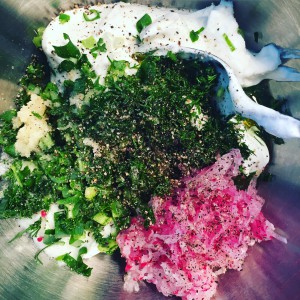
Tzatziki is a Greek sauce traditionally made with shredded cucumbers but here I used radishes and green onions instead. I served it with falafel but you could use it as a dip for pita chips…or you can eat it with a spoon 🙂

Radish & Green Onion Tzatziki
makes about 1-1/2 cups

Ingredients:

  • 1 cup Greek yogurt (I use Fage brand)
  • 4-5 medium radishes, grated on the medium holes of a box grater (should be about 3 tablespoons)
  • 2 scallions, trimmed and thinly sliced
  • 1 tablespoon minced fresh dill
  • 1 medium garlic clove, minced
  • 1 tablespoon extra-virgin olive oil
  • 1-1/2 teaspoons white wine vinegar
  • Salt and freshly ground black pepper to taste

Directions:

  • Mix all ingredients together until well blended. If you are making this ahead, you may want to salt the radishes to draw out excess moisture. Otherwise, the sauce will be thinned out a bit by the liquid from the radishes.