Leaf Celery Gremolata

Gremolata is an herb based condiment typically made with parsley, lemon zest and garlic. Its beauty lies in its simplicity – just three ingredients, chopped, minced and grated and tossed together. Each ingredient is bold so just a sprinkling really heightens the flavor of whatever you use it with.

I swapped out the parsley in favor of leaf celery (CSA’ers – this is in next weeks share!). If you aren’t familiar with leaf celery, it looks a lot like parsley but the celery taste is unmistakable. There are actually 3 different celery plants grown for different culinary uses – stalk celery, celery root and leaf celery. This website provides a lot of additional background and growing information.

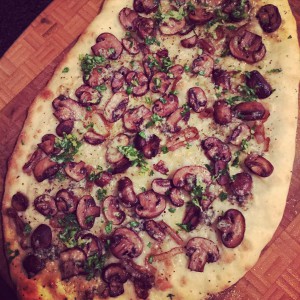
You can use this with many different types of dishes. The original version was made to accompany osso buco, a braised veal shank, so I imagine this would pair well with many types of roasted meat dishes. For cheese lovers, I love the flavor of celery with blue cheese. You could pick up some Sequatchie Cove Creamery’s Bellamy Blue at the Main Street Farmers Market and serve it on crackers with a little of the gremolata sprinkled on top. This also goes well with starchy dishes as well, such as risotto or pizza. I originally made this as a garnish for a mushroom pizza and it was fantastic (pizza can be a fairly quick meal when you purchase prepared pizza dough from your local grocer or Niedlov’s Breadworks). Please experiment and let us know how you use it! Enjoy!

Leaf Celery Gremolata
makes about 2 tablespoons

Ingredients:

  • 2 tablespoons freshly chopped leaf celery
  • 1 teaspoon lemon zest
  • 1 large garlic clove, minced

Directions:

  • Mix all ingredients together until fully incorporated. Best used when freshly prepared.

Egg Drop Soup (Alice O’Dea Article)

Hello! Here is the latest article from our very own (CSA member, that is) Alice O’Dea. This week she discusses egg drop soup and I cannot wait to try it for myself! I have pasted the text of the article below for your reference but click on the link and check out the pretty picture of the soup. Enjoy!

I was reading about spring soups this week, and when I saw an image of this egg drop soup with ginger, chiles and spring peas, I thought it looked pretty awesome. But I didn’t have any ginger, chiles or spring peas, nor did I have the chicken broth and radishes that are also included in the recipe. No matter—those were just minor details. I was suddenly in the mood for egg drop soup, so I made some with what I had on hand.

This is a great dish that can be made on a moment’s notice in a matter of minutes. It is a substantial and comforting soup that provides protein without a lot of fat, and it is fun to cook—pouring the beaten eggs into the swirling broth makes such pretty patterns in the pot! It also doesn’t require a recipe, as you can make just one serving or much more, using some basic proportions and your own embellishments.

Variations on egg drop soup go by many names, depending on where you are in the world. It is known as egg flower soup in China, stracciatella in Italy,le tourin in France and avgolemono in Greece. A version in Austria (eierflockensuppe) is made by mixing the egg with flour so that it forms little dumplings when poured into the broth.

There are really only two requirements for egg drop soup: a flavorful liquid and an egg. The liquid is usually chicken broth or stock, but you can also try beef or vegetable stock (if you make some from scraps, you’re essentially conjuring this soup from little more than an egg and water!). Figure on somewhere around a cup or two of stock and one egg per serving of soup. The rest you can just fill in using whatever you can dig out of your refrigerator, find in the pantry or have growing out in the yard.

Of course, the better your ingredients, the more satisfying your results will be. Use the best stock and eggs you can find. Bring the broth to a gentle simmer over medium-high heat. Some other flavors and textures you might want to add at this point are soy sauce, ginger, fish sauce, garlic, sliced chilies, grated cheese, bread crumbs, farina, asparagus, snow peas, snap peas, greens, bean sprouts, frozen peas or corn, mushrooms, meat, tofu, miso, lemongrass, shredded carrots or spices (such as nutmeg, star anise, cinnamon, cloves, cumin and bay leaf).

If you want pasta or rice in your soup and it needs time to simmer, add it at this point so that it can cook to the proper texture. You want the eggs to be one of the last ingredients you add to the soup, but you might want to hold off adding anything to the pot that is very tender (like fresh spinach or chives) until the broth is fully heated and the starches properly softened.

Some recipes call for a bit of cornstarch (up to a tablespoon per quart of liquid) to firm up the broth, but they also warn not to add it too soon or it won’t hold its thickness. Regardless, if you use it, combine the cornstarch with an equal amount of broth or water before adding it to the pot so that it doesn’t get lumpy.

While the broth mixture is heating up, beat one egg for each serving. Some recipes out there call for whole eggs, and others don’t use all the yolks. That’s entirely up to your tastes and nutritional needs. I tend to make small batches of this soup, as it’s best when fresh, so I usually use just an egg or two anyway.

Turn the heat under the pot to low, mix the broth lightly, and slowly pour the beaten eggs into the soup while still stirring. Keep swirling until the egg tendrils set into curds, about two or three minutes. While the soup finishes cooking, you can taste and add last-minute flavors such as salt, sesame oil, vinegar or a splash of lemon juice.

Once it’s all set, scoop the soup into bowls and garnish with some scallions, cilantro, fresh chives, thinly sliced radishes, a splash of hot sauce and/or Parmesan cheese. Season with freshly ground pepper and serve. Also, check your time, since it’s likely that you went from start to soup in as little as 15 minutes. Now that’s fast food!

Collard Green Falafel

I absolutely love falafel. I could eat it every day and be a very happy person. Especially when there’s hummus, pita and olives served along side. But to make authentic falafel, one needs to start with dried chickpeas (something I don’t always have on hand) and remember to soak them overnight (which I rarely remember to do). You don’t actually cook the beans when falafel are made this way which ensures a nice dense texture. While the recipe below yields falafel that are a little softer than the traditional version, they are a great, quick alternative.

The recipe below was adapted from The Minimalist Baker. They are all about simple recipes that can be made with 10 ingredients or less. Check out their blog if that type of cooking is up your alley!

Collard Green Falafel
makes about 25 1.5″ patties

Recipe note: I made a batch of these with almost twice the amount of collards (7.5 ounces/4 cups). I had to add more flour to keep them together and then cook them longer, but if you want to pack in more greens, it’s an option!

  • 4 ounces collard greens, stemmed and roughly chopped into 2″ pieces (about 2.5 cups) (see recipe note)
  • 1 (15-oz) can chickpeas, rinsed and drained
  • 3 medium cloves garlic, minced (about a teaspoon), or more if desired
  • 1 tablespoon tahini
  • 1 tablespoon fresh lemon juice
  • 1/2 teaspoon ground cumin
  • 1/8 teaspoon ground cinnamon
  • 1/2 teaspoon table salt
  • 5 grinds fresh black pepper
  • 3 to 4 tablespoons all-purpose flour
  • 1/4 cup olive or vegetable oil

Directions:

  • Add all ingredients except the flour and oil to a large food processor and pulse to combine. I like to keep just a little texture in the beans if possible and not completely puree everything, so just keep pulsing, stopping to scrape down the bowl when needed, until you get the right consistency. Taste and add more seasoning (salt, cumin, garlic) if desired.
  • Transfer mixture to a medium mixing bowl and add 3 tablespoons of flour to start. Mix to combine and add the extra tablespoon of flour if the mixture doesn’t stay together when you clump a little up in your hand.
  • Portion out 1 heaping tablespoon of the mixture onto a rimmed baking sheet lined with aluminum foil. Form into a 1-1/2″ wide by 1/2″ tall disk. Continue until you have used up the remaining mixture. Set aside.
  • Heat 2 tablespoons oil in a 12″ skillet over medium heat until shimmering. Transfer roughly 12 disks to the oil, making sure not to crowd the pan. Cook until brown and crisp on the first side, about 5 minutes, then flip and cook another 5 minutes on the second side. You may need to add just a little more oil to the pan after flipping in order to get the second side crisp. Once cooked, transfer to a paper towel lined plate to drain. Repeat with remaining oil and mixture. The falafel will firm up a bit when allowed to cool. Serve and enjoy.

Dealing with Disaster (Alice O’Dea Article)

Hi! I am almost a week late in posting another great article from Alice O’Dea, but here it is (with a great shout out to Tant Hill!). This week’s article is titled “Dealing with Disaster” where Alice reminds us that all is not lost when a dish doesn’t turn out as expected. The topic really hits home with me as I hate wasting food, and given the amount I cook, something is bound not to turn out right. Check out the original article here. I have also posted the text below.

I’ve been having one of those weeks where not many things have turned out the way I intended. My ambitions were thwarted in a variety of ways. The fruit I was drying somehow turned out both underdone and stubbornly fused to some waxed paper. My new food mill didn’t work as advertised, and I had to do some scrambling to figure out how to give cauliflower a roughly puréed texture without turning it into a liquid slush. And despite the liberal use of onions, garlic and seasonings, some bean soup came out incredibly bland.

It’s a terrible thing to waste food, so even while it might be a tad dramatic to call these experiences “disasters,” I was challenged to improvise, or the results of my efforts in the kitchen might have ended up in the compost heap. Fortunately, food is adaptable and flexible; if one thing doesn’t work out, it often can be adapted into another.

There is some good reading out there about how to turn a mistake into an innovation. Tamar Adler devotes a whole chapter and an appendix of “An Everlasting Meal” to the subject, and each is rich with suggestions. Burned eggplant? Make baba ghanoush. Mushy beans? Purée or “refry” them. Does it have too much spice, oil, or flavor? Mush it up and call it a condiment. And so on.

The Internet is also filled with great ideas for turning mishaps into meals. Dilute an overly salty dish with supplemental ingredients, or balance the flavor with something sweet, spicy or acid. Turn old bread into deliciouscrostini. Shred overcooked or dry meat and use it to fill impromptu tacos. There’s no need to throw that food away if you’re a bit creative.

Your chances of recovering after a mistake in the kitchen are higher both if you have a well-stocked pantry, and if you have been working with good raw materials. There’s no saving the mac & cheese if what you ruined came in a box with bright orange powdered “cheese” (but then again, you’re only out a buck). But if you set out to cook some spaghetti carbonara and suddenly realize that you’re out of eggs, you can quickly shift to making Cacio e Pepe instead, because quality ingredients—like a nice olive oil or interesting cheese—can hold their own even in a simple dish.

I was able to salvage some of my fruit after letting it sweat in the refrigerator overnight; it seemed rather jam-like, so I used it as a spread. My bean soup was brightened with a big glug of vinegar and a splash of hot sauce at the table. I ran the cauliflower through a cheese grater, and even though the texture wasn’t ideal (my fake “tortilla” broke when flipped), the egg-and-cauliflower quesadilla ended up being pretty tasty (and was rehabilitated further when served alongside some of the most beautiful kale I have ever seen, courtesy of Tant Hill Farm). It all eventually worked out.

How have you recovered when things didn’t go as planned?


Chickweed Power Salad

I visited The Farmer’s Daughter for brunch this past weekend for the first time and I was not disappointed. It is just my type of food – local, seasonal and flavorful. The menu isn’t very big but I had a hard time deciding what to get. Pancakes? Grits & Greens? Hashbrowns? Everything sounded delicious. Oddly enough (for me), I chose the Power Salad. Maybe it’s the start of spring or the fact that the salad is described as “hearty” on the menu. Either way, I loved it and was determined to make my own version.

Their salad includes quinoa, French lentils, roasted root vegetables, seasonal slaw, sunflower and pumpkin seeds, shaved parmesan, and lemon-miso dressing with a smattering of salad greens tossed in.  I started, of course, using what was provided in last weeks CSA share. While I could have used kale as the base of the salad, I thought I would try it with chickweed. Check out this link if you aren’t familiar with chickweed. It’s nutritious, crunchy and it tastes similar to spinach. To this, I added the quinoa and French lentils and kept the pumpkin seeds and dried cranberries. I used goat cheese instead of Parmesan because it was on hand but I think I liked it better with Parmesan. Parmesan provided umami (or savoriness) that the salad was lacking otherwise. I also swapped the roasted root vegetables for shaved carrots (because it was easier) and lemon-miso dressing for lemon-avocado dressing (because it was on hand).

This isn’t so much a recipe as it is a starting point. I think what makes this salad wonderful is the combination lentils and quinoa with lots of other flavors and textures. Below are directions on the lentils, quinoa and dressing but just use what you want and what is on hand. Experiment and enjoy this hearty salad!

Chickweed Power Salad
roughly 4 servings

Salad ingredients:

  • French lentils (recipe below)
  • Quinoa (recipe below)
  • Chickweed or greens of choice (kale, salad greens)
  • Shaved carrots or veggie of choice (roasted root vegetables)
  • Dried cranberries or dried fruit of choice (raisins)
  • Toasted pumpkin seeds or seeds/nuts of choice (sunflower seeds, almonds, walnuts)
  • Shaved Parmesan or cheese of choice (goat cheese)
  • Lemon-avocado dressing (recipe below) or dressing of choice

Lentils (adapted from Cook’s Illustrated):

  • Ingredients:
    • 1 cup French lentils
    • 1 bay leaf
    • 1 teaspoon table salt
    • 4 cups water
    • Optional: a few smashed garlic cloves, 1/2 onion, stalk of chopped celery, sprig of fresh thyme
  • Directions:
    • Bring all ingredients to a boil in a medium saucepan. Reduce to a simmer and cook until the lentils are tender but still hold their shape, 25 to 30 minutes. Drain and set aside.

Quinoa (from Cook’s Illustrated):

  • Ingredients
    • 1 cup quinoa, rinsed and dried on a towel
    • 1/4 teaspoon table salt
    • 1-1/2 cups water
  • Directions:
    • Toast the quinoa in a large saucepan over medium heat, stirring often, until the quinoa is lightly toasted and aromatic, about 5 minutes. Stir in the water and 1/4 teaspoon salt and bring to a simmer. Reduce the heat to low, cover, and continue to simmer until the quinoa has absorbed most of the water and is nearly tender, about 12 minutes. Spread the quinoa out over a rimmed baking sheet and set aside until it is tender and cool, about 20 minutes.

Lemon-Avocado Dressing

  • Ingredients:
    • 1/2 Hass avocado, pitted and removed from skin
    • 2 tablespoons lemon juice
    • 2 tablespoons extra virgin olive oil
    • 2 tablespoons water
    • 1 small garlic clove, minced
    • 1/4 teaspoon kosher salt
    • A few grinds of fresh black pepper
  • Directions:
    • Place all ingredients in a small food processor or blender and process until fully combined. Taste and adjust seasonings as needed.

Recipes From Around the Web :: Greens Edition

Hi everyone!

We are knee deep in delicious greens so thought I would share some tasty recipes that are on my “must-try” list. The greens in most of these recipes are interchangeable with each other so feel free to experiment. We would love to hear how you use them!

Greens of All Kinds!

First up: you will come to realize that I rely on Cook’s Illustrated/America’s Test Kitchen for the basis of a ton of recipes (not to mention their equipment reviews and taste tests). It just so happens they are coming out with a cookbook titled The Complete Vegetarian Cookbook and have asked numerous food bloggers to test and post recipes from the book. Below are two that use greens and look amazing!

There are a lot of things I wish I thought of first – one of them being collard green wraps! Seriously, they don’t take much time and you can stuff them with just about anything. They are a great gluten-free option, too.

I think this next recipe would be great with the tender collards we are getting right now. Add in other colorful veggies from the market, plus this tahini based dressing, and you can’t go wrong!

Sometimes, you don’t need much to put together a healthful and satisfying meal. It’s just pasta, greens and cheese but it’s sure to satisfy.

Until next time, enjoy your greens!


Healthy Chickpea Snacks (Alice O’Dea Article)

Hello!

We wanted to share yet another great article from a Tant Hill CSA member, Alice O’Dea. This week, she is exploring the wonderful world of roasted chickpeas. Simple, healthy and affordable – it’s just the thing to make along with all of the wonderful greens you are getting right now. You can read the article here but I have also posted the text below. We hope you enjoy!

Well, we made it to March, folks. And we’ve reached that sweet spot in the year where a few of us have not yet abandoned our New Year’s resolutions, others are enduring Lenten sacrifices and the (very brief) spring preview we enjoyed this past week has some people already thinking about getting shaped up for summer togs.

If you fall into any of those categories, I’ve got a snack for you! It’s high in protein, low in fat, packed with nutrients and fiber; and it’s gluten-, nut-, soy-, sugar- and grain-free! It also can be packed with as much flavor as you’re willing to give it.

I’m talking about roasted chickpeas. This is a really cheap and easy treat to make at home. All you need are some chickpeas (dried or canned), a bit of oil, and some optional seasonings and spices. The prep takes just moments, and the rest is just baking time. When you’re done, you’ll have a snack or garnish that can add protein to your diet and keep you feeling sated for hours.

Start with the chickpeas. If you’re using the dried variety, you’ll have tocook them (or if you put in a little extra the last time you made a batch, pull them out of the freezer). If you’re using canned chickpeas, drain and rinse them.

Either way, you don’t want the chickpeas to be at all damp, so dry them in some fashion. Some options are to run them through a salad spinner, blot them between towels, or—if you’re one of the few people who thinks ahead—put them on a baking pan and let them sit in a cold oven overnight.

I consulted almost 20 recipes for roasted chickpeas, and all but one of them called for roasting them in a oven that is anywhere from 375 to 450 degrees (the lone maverick suggested skillet roasting them in some oil on the stovetop over medium-high heat for about 20 minutes). If you pick the middle ground, that will put your oven at somewhere around 400–425 degrees.

While the oven is heating, mix up whatever flavors you want for your beans. There is a lot of room for improvisation here. You can shoot for a total of about a tablespoon of spices per can of beans (which is equivalent to about one and a half cups of cooked chickpeas). Use a combination of powdered cumin, chilies, coriander, ginger, cayenne pepper, garlic, onion, paprika, cinnamon, curry, turmeric, allspice or garam masala. Other things you might want to include are crushed toasted nuts or seeds, nutritional yeast, or ground herbs (such as rosemary, thyme, marjoram or sage). Some recipes I looked at also called for adding a few squirts of liquid ingredients such as maple syrup, soy sauce, tamari, liquid aminos, liquid smoke, or lemon juice and/or zest.

Mix your seasonings in a bowl, add the chickpeas, and then drizzle them with up to a tablespoon of oil per can of beans. Stir everything together until the chickpeas are coated, season with salt and pepper if you like, and spread the chickpeas out on a baking sheet. Bake until done, which should take anywhere from 25 to 45 minutes. Stir the chickpeas around a little bit every 10 or 15 minutes so they cook evenly, and also to check for doneness. You want them to be crisp and golden. With so many variables at work, your cooking time will probably vary from batch to batch, so keep a close eye on them. I made two versions this week: one with canned chickpeas and another with some that I’d pulled out of the freezer. The canned ones cooked quicker, but the ones I cooked from dried beans ended up being a little lighter and crunchier.

With so many possible combinations of flavors, this is a treat that can hold up to numerous reruns without ever getting tiresome. Enjoy!


Millet & Quinoa Patties with Curried Swiss Chard

I grew up with finches (the small gray birds with orange cheeks) and thought millet was just birdseed. I had no idea people all around the world ate it until just a few years ago! Millet has been cultivated in Eastern Asia for 10,000 and it is staple crop in parts of India and Africa. After reading about the numerous health benefits, not to mention the fact that it is gluten-free, I think it’s about time it became a part of our everyday diet.

This recipe was inspired by Hillary’s Eat Well veggie burgers which I found in the freezer section at Whole Foods. While I love their version, I thought I could come up with my own that wouldn’t take much time and allow me to add the ingredients and flavors I like. I started with this recipe but then made some changes based on a couple of trials. Add your own twists with different greens and spices. We hope you enjoy!

Millet & Quinoa Patties with Curried Swiss Chard
makes 10 patties

Recipe notes:  1) I stopped short of calling these “burgers” because I don’t think they are sturdy enough but I do think they would be good in a wrap with greens and a simple sauce; 2) I used Tant Hill’s rainbow Swiss chard but feel free to use most any green you have available; 3) psyllium husk is used a lot in gluten-free baking as it is hygroscopic, which means it absorbs water and becomes sticky, thus holding the patties together. It can be online or in well stocked grocery stores (I found it at Whole Foods).

Ingredients:

  • 1/2 cup (3.5 ounces) raw millet, rinsed and drained
  • 1/2 cup (about 3 ounces) raw quinoa, rinsed and drained
  • 2 tablespoons coconut oil
  • 5 ounces Swiss chard, stemmed, leaves finely chopped (3 cups) and stems minced (see recipe note)
  • 1 medium shallot, minced
  • 1-1/2 teaspoons curry powder
  • 1/2 teaspoon garam masala
  • 2 large garlic cloves, minced
  • 1 tablespoon psyllium husk (see recipe note)
  • 1 tablespoon brown rice flour
  • 1 tablespoon apple cider vinegar
  • 1 teaspoon kosher salt

Directions:

  • To cook millet: add millet and 1-1/3 cup water to a small saucepan and bring to a boil. Reduce heat, cover and simmer over low heat for 13-18 minutes, or until the grains are tender and all of the water is absorbed. Remove lid and boil off excess water if needed. Turn off the heat and let stand for 10 minutes. Transfer to a large mixing bowl and set aside.
  • To cook quinoa: add quinoa and 1 cup water to a small saucepan and bring to a boil. Reduce heat, cover and simmer over low heat for 12-15 minutes, or until the grains are tender and the water is absorbed. Remove lid and boil off excess water if needed. Turn off the heat and let stand for 10 minutes. Transfer to bowl with millet and set aside.
  • For remaining ingredients: heat coconut oil in a large skillet over medium heat until shimmering. Add shallot and Swiss chard stems and cook, stirring frequently, until softened and starting to brown, about 5 minutes. Add curry powder and garam masala and cook, stirring frequently, until fragrant, about 1 minute. Add garlic and cook, stirring frequently, until fragrant, about 30 seconds. Remove from heat and transfer to the bowl with the millet and quinoa. Add the psyllium husk, brown rice flour, vinegar and salt to bowl and stir to combine. Taste and adjust seasoning as needed. Line a rimmed baking sheet with aluminum foil and using a biscuit cutter or your hands, form into 3-1/2″ wide by 1/2″ tall patties (about 1/3 cup of the mixture per patty). At this point, I would recommend you place the baking sheet directly into the freezer for a few hours until frozen through and then transfer frozen patties to a ziperlock bag.
  • To cook: heat 1 tablespoon oil in a large skillet over medium heat until shimmering. Cook a few patties at a time until brown and crisp, about 5 minutes, then flip and cook an additional 5 minutes and serve.

GreenTrips Article

Hi everyone!

We wanted to share the recent GreenTrips article. It discusses the numerous benefits of Mark & Gina’s use of bicycles on the farm. You can find the original article here, but I have copied the text below for your convenience. Let us know if you have any feedback!

For most of us, the word that immediately comes to mind after the word “farm” is “tractor”.

While Mark and Gina Tant, the owners of Tant Hill Farm, still use traditional heavy machinery for work, to get around the farm they have opted for a human-powered device.

“This thing came up at the same time we were buying our tractors and equipment—the biking idea came up as we were starting the farm,” Mark Tant said. “There’s another farm that uses bikes too … I remember thinking it makes total sense.”

“It’s always been a dream of both of ours,” Mark said, describing his first forays into farming.

“Our kids are grown; the last one graduated college last year, so we left Nashville with the view of finding some land and we landed in the Chattanooga area”, he said. “We both have always felt like we wanted to get out, away from the city, and spend the rest of our lives living off the land,” he said. With self-sufficiency in mind, the Tants settled in Lafayette, GA.

“We didn’t know anything about farming,” he admits. “I left my job of 28 years as a biomedical technician. We knew a little bit about food, but how to grow it we learned over time. We didn’t even own a lawn mower when we started looking,” he said. “We just picked it up. It was just a natural part of what we were trying to accomplish by living off the land and growing our own farm.”

As the Tants became more familiar with farming, their biking plans formed as well. “We bought five bikes about four years ago from an auction—it was a big farming auction—and some of the farmers were standing around saying ‘who wants a bike?’,” Mark said, recalling that the farmers were anxious for the next lot in the sale. Mark bought the bikes, but never used them. “It’s been in the thinking stage for a while; we just didn’t make the move until this year. We’ve picked up two; we plan to pick up a couple more just to be able to use them in place of a four-wheeler,” he said.

Adding bikes into their daily routine has provided many benefits, starting with practicality and fuel savings. “There’ll be times when I might be back (on the other side of the farm) somewhere on a tractor, and then I’ve got to get back here. If the bike is ready to go, it’s a ten-times faster method. It’s also an efficiency thing; the property is graded down from 1000 feet to about 100, going from the back to the front is all downhill. I can fly from the back to the front, and get a little workout getting back up. Throughout the day, all that adds up,” he said, adding, “we do see this as conserving fuel for sure, and that is one of the benefits: saving on the fuel costs.”

Mark has found health benefits as well. “I like it because I had knee surgery about five years ago, and the doc said I could extend (the knee’s health) out based on how I use it, so the bike will help a lot on that front.”

Mark also enjoys knowing that biking around the farm helps them contribute to more sustainable agriculture. “We do have a view for land conservation,” he added, “so we like the idea of going light on the environmental Impact. The bikes will help with that.”

Small farms are at an interesting point, Mark said. While their numbers have decreased in recent years, the growth of community support has emboldened farmers to try new things. The benefits of incorporating biking on the farm have grown out of that freedom. “I am at the age right now—57, 58, 59—it’s the average age of small farmers and small land. We’re serious about finding partnerships for young people, about picking up this land and carrying it on.”

“Now, even that 58-year old owner sees the possibility that his land can be held in a way that is better for the rural community and even for the urban community. So not only are bicycles part of what we’re doing, but (it) seems like every year we’ve got something new going on.”

Mark reminded us that “Farmers are the real rock stars. We’ve been idolizing the wrong people for too long.”  While they’re not likely to fill a stadium, we certainly think Mark and Gina Tant are rock stars for their innovative use of bikes for getting around on the farm. Incorporating cycling and other transportation options into your routine can bring you just as many benefits, regardless of how rural your surroundings are.

If you have a story about how you get around with GreenTrips, we encourage you to share it with us at greentrips@chattanooga.gov.


Greens & Cheese Frittata Muffins

This is an example of the type of recipe I love the most: simple, seasonal and with the option to vary ingredients based on what’s available. While I would call this recipe “simple”, I think it is important to understand a little science behind it. Specifically, the science behind how eggs cook and why it is beneficial to add a little (or a lot) of dairy.

First, let’s review how eggs cook. The next few paragraphs are from Cook’s Illustrated, who do a much better job explaining this than I can.

Eggs contain both egg whites and egg yolks. The white contains about 90 percent water and 10 percent protein. The yolk contains about 50 percent water, 20 percent protein, and 30 percent fat. The yolk also contains an emulsifier known as lecithin that keeps the fat suspended in the water. The protein strands in the egg white and yolk are all coiled up like a bowl of cooked spaghetti. For an egg to cook, the proteins need to uncoil. This process begins to happen when we mix the eggs in a bowl. The whipping action starts to uncoil the proteins. 

Once the eggs are heated and we start to cook the eggs, the now uncoiled proteins begin to chemically bond with each other. They form chemical cross-links—like strips of Velcro sticking to each other. This chemical bonding creates a network that traps water inside. This is observed as the coagulation temperature of eggs—the point when they begin to turn solid as they are cooked. As the eggs continue to cook, more bonds are formed until the network of proteins is strong enough to form the solid structure of a fully cooked egg with all the water trapped inside.

However, if you overbeat the eggs, the proteins will uncoil so much that they overreact and form a tough structure. In addition, too much cooking can lead to too much bonding between proteins, producing eggs that are also too tough.

So basically, we want the proteins to bond so the eggs will set up, but not bind so tightly that they become tough. Introducing dairy to the eggs will coat the protein molecules so that they can’t bind with one another as tightly. So it makes sense that so many egg recipes add some dairy to the recipe. The recipe below only adds 4 ounces of dairy to about 18 ounces of egg, whereas a quiche recipe is typically twice the amount of dairy to eggs by weight. So the texture you want in the end will determine how much dairy you will add.

Enough science talk – let’s get to the good stuff!

Greens & Cheese Frittata Muffins
makes 12 muffins

Recipe notes: 1) feel free to swap out the olives for just about anything else – a little bit of ground meat, chopped artichokes or sauteed mushrooms are just a few options; 2) you can use many different types of cheese here but I would avoid really dry, aged cheeses, such as Parmesan or an aged cheddar because they won’t melt very well. I have used both goat cheese and Cumberland from Sequatchie Cove but I think Monterey Jack, Fontina or even bleu cheese would be great.

Ingredients:

  • 1 tablespoon olive oil
  • 1/3 cup finely diced shallot (from 1 large shallot)
  • 8 ounces of tender greens (kale, tender collards, Swiss chard), stems removed, and finely chopped (about 3 cups)
  • 2/3 cup (3 ounces) pitted olives, roughly chopped (see recipe note)
  • 2 1/2 ounces cheese, shredded (see recipe note)
  • 9 large (18 ounces) eggs 
  • 1/2 cup (4 ounces) whole milk
  • Salt and pepper

Directions:

  • Adjust oven to middle rack and preheat to 350 degrees.
  • Spray a standard 12 muffin tin with non-stick cooking spray and set aside.
  • Heat oil in a large skillet over medium heat until shimmering. Add shallots and cook, stirring frequently, until softened and lightly browned, about 5 minutes. Add greens and cook, stirring frequently, until wilted, about 3-5 minutes longer. Remove from heat, taste, and season with salt and pepper. Equally divide the shallot/greens mixture between muffin tins (about 1 tablespoon per muffin cup). Equally divide the olives and cheese between each muffin tin.
  • In a medium mixing bowl, whisk eggs, milk, salt and pepper together until fully combined. I found it helpful at this point to transfer the egg mixture from a bowl to a 2 cup liquid measuring cup to make it easier to pour into the tins. Fill tins with the egg mixture, leaving at least a 1/4″ space from the top.
  • Transfer to the oven and cook for about 23-26 minutes, checking the tops to make sure they are just set. Remove from the oven and allow to cool for a few minutes. Transfer to a cooling rack and serve.